Every commercial lease that involves construction answers the same three questions somewhere in its pages: who designs the space, who builds it, and who pays. The answers are spread across the tenant improvement allowance, the work letter and a handful of defined terms, and the way they are written decides whether your build-out budget is a real number or a hopeful one.
This article explains how tenant improvement allowances work in practice, how turnkey build-outs differ, what a work letter actually controls, and the clauses that most often cost tenants money after signing. It is written for business owners and office managers reviewing a lease, not for attorneys, and it is not legal advice. Have your lease reviewed by a Texas commercial real estate attorney; use this to know what to ask them about.
The tenant improvement allowance (TIA)
A tenant improvement allowance is a fixed sum the landlord contributes toward building out your space. It is usually quoted per rentable square foot, so a 5,000-square-foot space with a $40 allowance comes with $200,000 of landlord money for construction. The allowance is not a gift: it is priced into the rent over the lease term, and a higher allowance generally means higher rent or a longer commitment.
Three details determine what that number is really worth.
What the allowance can be spent on
Leases define “tenant improvement costs” or “allowance items” narrowly or broadly. A broad definition covers hard construction costs, architectural and engineering fees, permit fees, cabling, signage and sometimes moving expenses. A narrow one covers only permanent improvements to the building, which excludes furniture, equipment, data cabling and anything the landlord would not want left behind. If your project depends on the allowance covering design fees or low-voltage work, the definition has to say so.
How the allowance is paid
Most landlords reimburse rather than pay up front. The tenant’s contractor completes work, submits an application for payment with lien waivers and backup, and the landlord releases funds, often after retaining a percentage until final completion. Some leases pay in a single draw after the certificate of occupancy is issued. That structure means the tenant or contractor carries the full cost of construction for months, which affects both your cash planning and the contractor’s pricing. Ask for progress draws and a clear timeline for landlord review and payment.
What happens to unused allowance
If the build-out comes in under the allowance, some leases let the balance apply to rent or to furniture, while others simply return it to the landlord. Negotiate this before signing, because it changes how aggressively you should value-engineer the design.
Turnkey build-outs
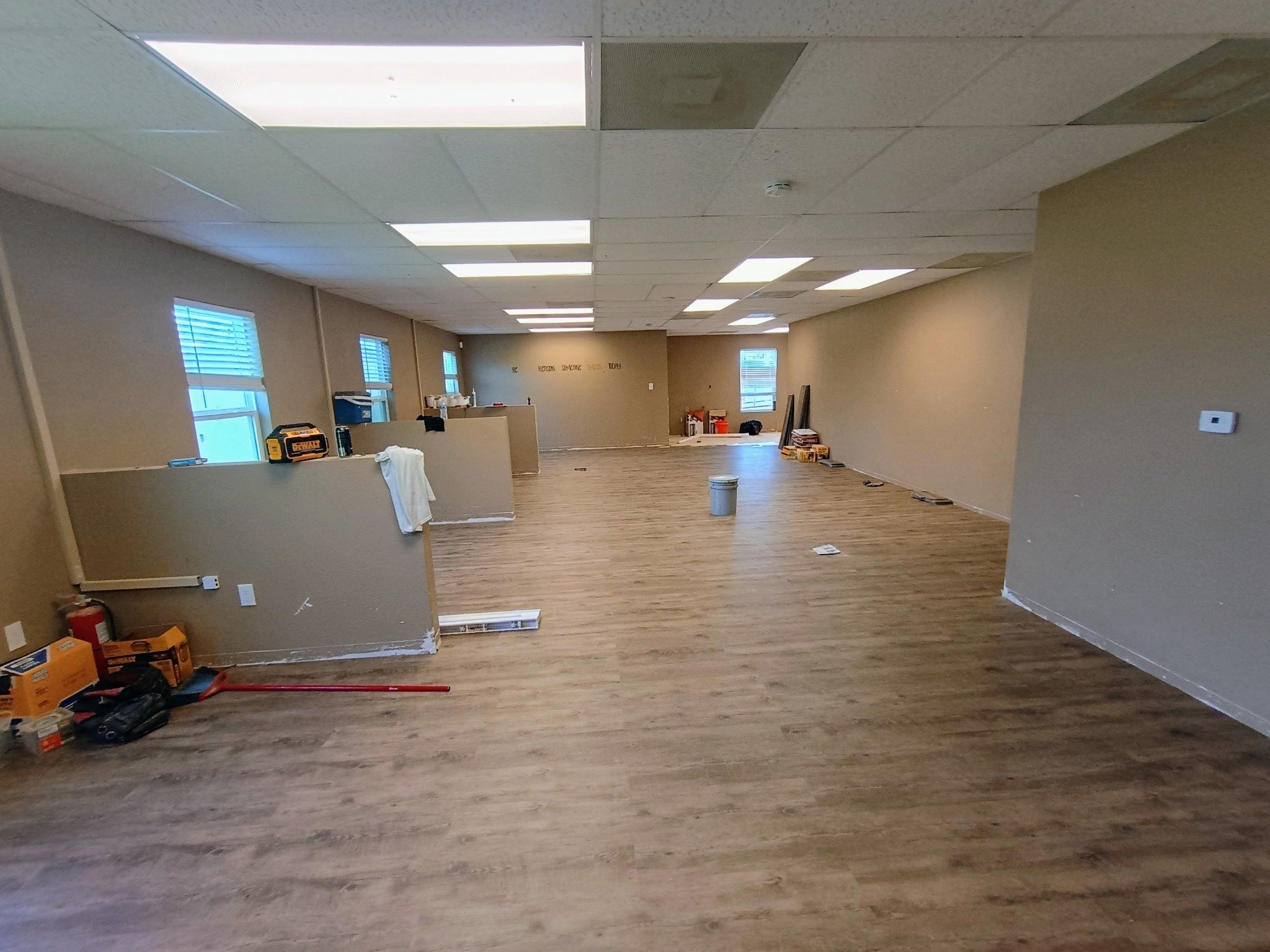
In a turnkey deal, the landlord agrees to deliver the space built to an agreed scope, using its own architect and contractor, with no separate allowance. The appeal is simplicity: one party owns the schedule and the cost. The trade-off is control. The landlord’s team builds to the scope written in the lease and to the landlord’s standard finishes; anything beyond it becomes a tenant-paid change order, priced by a contractor you did not select.
Turnkey works best when your needs are standard and the scope exhibit is detailed enough to leave little room for interpretation. If your operation needs specialized rooms, heavy electrical, extra plumbing or a specific look, an allowance with your own contractor usually produces a better result.
The work letter
The work letter is the construction exhibit to the lease, and it is where the real rules live. A well-written work letter addresses:
- Landlord’s work versus tenant’s work – Exactly what the landlord delivers (often the shell or vanilla box items) and what the tenant is responsible for. The line between the two is the most common source of disputes.
- Delivery condition – The condition the space must be in on the delivery date, with a walkthrough and a punch list for anything incomplete. If the HVAC does not work on delivery, the work letter should say whose problem that is.
- Design approval – Who prepares the drawings, how long the landlord has to review them, and what the landlord can reject. Unlimited review time quietly extends your schedule.
- Contractor selection – Whether you may choose your own general contractor, whether the landlord must approve it, and any required insurance limits. Some leases require landlord-approved contractors for roof, structure, fire protection or base-building systems.
- Construction management or supervision fees – Many landlords charge a percentage of construction cost to oversee tenant work. Three to five percent is common; it is negotiable, and it comes out of your allowance.
- Allowance disbursement – The draw procedure described above, plus deadlines after which unused allowance is forfeited.
- Restoration – Whether you must remove improvements and restore the space at lease end. Restoration obligations can be expensive for specialized build-outs and are worth striking or limiting.
Where tenants lose money
Allowances based on a layout nobody priced
Landlords quote allowances from market norms, not from your plan. A $35-per-foot allowance may cover a simple office and fall badly short for a clinic, a lab, a restaurant or any use that needs plumbing in new places. Getting preliminary pricing from a contractor on your actual test fit before you sign is the single most effective protection. It turns the allowance negotiation from a number into a comparison.
Base-building deficiencies pushed onto the tenant
Older buildings between San Antonio and Austin often need electrical service upgrades, HVAC replacement, roof repairs or accessibility upgrades to restrooms and entrances that were never part of the tenant’s plan. If the lease delivers the space “as is,” those costs belong to you. A pre-lease site assessment by your contractor identifies them while you still have leverage.
Code upgrades triggered by your use
A change of occupancy, an increase in occupant load, or a construction cost over the Texas Accessibility Standards registration threshold can require upgrades beyond your suite: additional exits, fire separation, restroom accessibility, parking and path-of-travel improvements. Clarify in the work letter whether code-driven upgrades to common areas and base building are landlord costs.
Change orders after the permit set
Every change after construction drawings are complete costs design time, sometimes re-permitting, and contractor time. Finalizing the layout and finish selections before the permit set is issued protects both the allowance and the schedule. The build-out process guide covers how those decisions sequence from lease signing through the certificate of occupancy.
Free rent that expires before the space opens
Rent abatement is usually tied to the lease commencement date, not to the day you can actually occupy. If design and permitting take longer than the abatement period, you pay rent on a space under construction. Tie the commencement date to substantial completion or to a realistic schedule your contractor has confirmed.
A practical pre-signing checklist
- Confirm the delivery condition in writing: shell, warm shell or second generation, and what is included.
- Have a contractor walk the space and price your test fit before the allowance is final.
- Ask for the allowance definition to include design, engineering, permit fees and low-voltage work.
- Negotiate progress draws with defined landlord review periods.
- Cap or strike the landlord’s construction supervision fee.
- Confirm who pays for base-building and common-area code upgrades.
- Tie rent commencement to substantial completion or a confirmed schedule.
- Limit restoration obligations at lease end.
- Decide what happens to unused allowance.
Frequently asked questions
Is a higher TI allowance always better?
Not necessarily. Allowances are financed through rent. If you can fund part of the build-out yourself at a lower cost of capital than the implied rate in the rent, a smaller allowance with lower rent may be the better deal over the term.
Can the allowance be used for furniture or equipment?
Only if the lease says so. Most landlords limit allowances to improvements that stay with the building. Some will allow a portion for furniture, fixtures and equipment or for moving costs if negotiated.
What is an amortized allowance?
An additional allowance the landlord funds and the tenant repays through higher rent over the lease, usually with interest. It can close a gap between the standard allowance and your actual budget, but compare the implied interest rate to other financing before accepting it.
Who owns the improvements at the end of the lease?
Permanent improvements generally become the landlord’s property at lease end, which is why landlords prefer the allowance to fund permanent work. Check the restoration clause so you are not required to remove what you paid to install.
Pricing a space before you sign
Long View provides preliminary pricing on test fits and plans for tenants and landlords across Central Texas so that allowance negotiations reflect real construction costs. You can submit your plans for a bid or learn more about our commercial build-out and tenant improvement work.